Palate as Portal
What does Slovenia taste like?
A region-by-region guide to Slovenian food and wine
By Charity Auger, luxury travel advisor · Path & Palate by Charity
Published
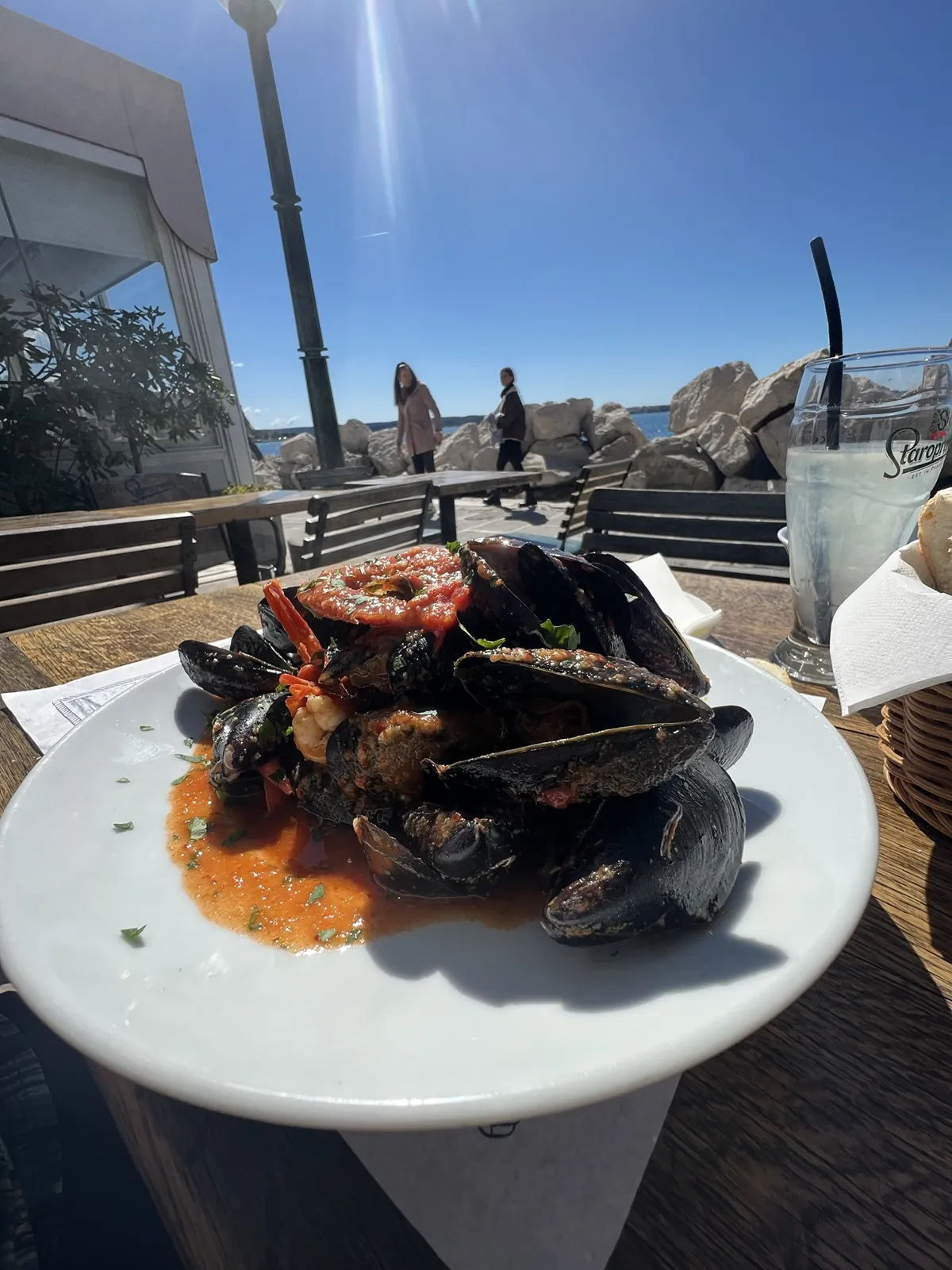
The best mussels I've ever eaten came out of the Adriatic at a small restaurant in Piran called Ribič Baja. I grew up in Florida and I've eaten seafood all over the world, so I don't say that lightly. I finished a 2023 trip through Slovenia there with my aunt, and I loved it so much that I went back later for a day with family and friends. Mostly for the mussels.
Mussels aren't what Americans picture when they think of Slovenia, if they picture it at all. But that's the thing about this country. For a place about the size of New Jersey, it fits a remarkable amount onto one plate.
The short answer: Slovenian food is a blend of its neighbors, and each region gives it an edge of its own. You taste Austria in the Alps and around Maribor, Italy in Goriška Brda and on the coast, Hungary in Prekmurje, and a Balkan love of foraging running through all of it.
Why does Slovenian food taste like its history?
To truly understand Slovenian food, you have to look at its history.
Slovenia sits where the Alps, the Adriatic, the Hungarian plain and the Balkans meet, and every one of those neighbors left something on the table. Centuries under the Habsburgs brought Austrian and German influence. The western hills and the coast lean Italian. The flat farmland in the east leans Hungarian. And running underneath all of it is the Balkan Slavic core.
What I love is what each region does with those influences. It takes them and adds an edge of its own, so a dish you think you know shows up tasting a little different.
Slovenia's food regions at a glance
- The Alps and Gorenjska (Radovljica, Bled): Austrian influence. Taste chocolate, Carniolan sausage and Alpine trout.
- Goriška Brda and the coast (Piran): Italian influence. Taste pršut, polenta, orange Rebula and Adriatic mussels.
- Štajerska (Maribor): Styrian, Austrian roots. Taste Šipon, Laški Rizling and pumpkin seed oil.
- Prekmurje: Hungarian influence. Taste prekmurska gibanica and bograč.
- Everywhere: the Balkan foraging tradition, and farm to table as a way of life.
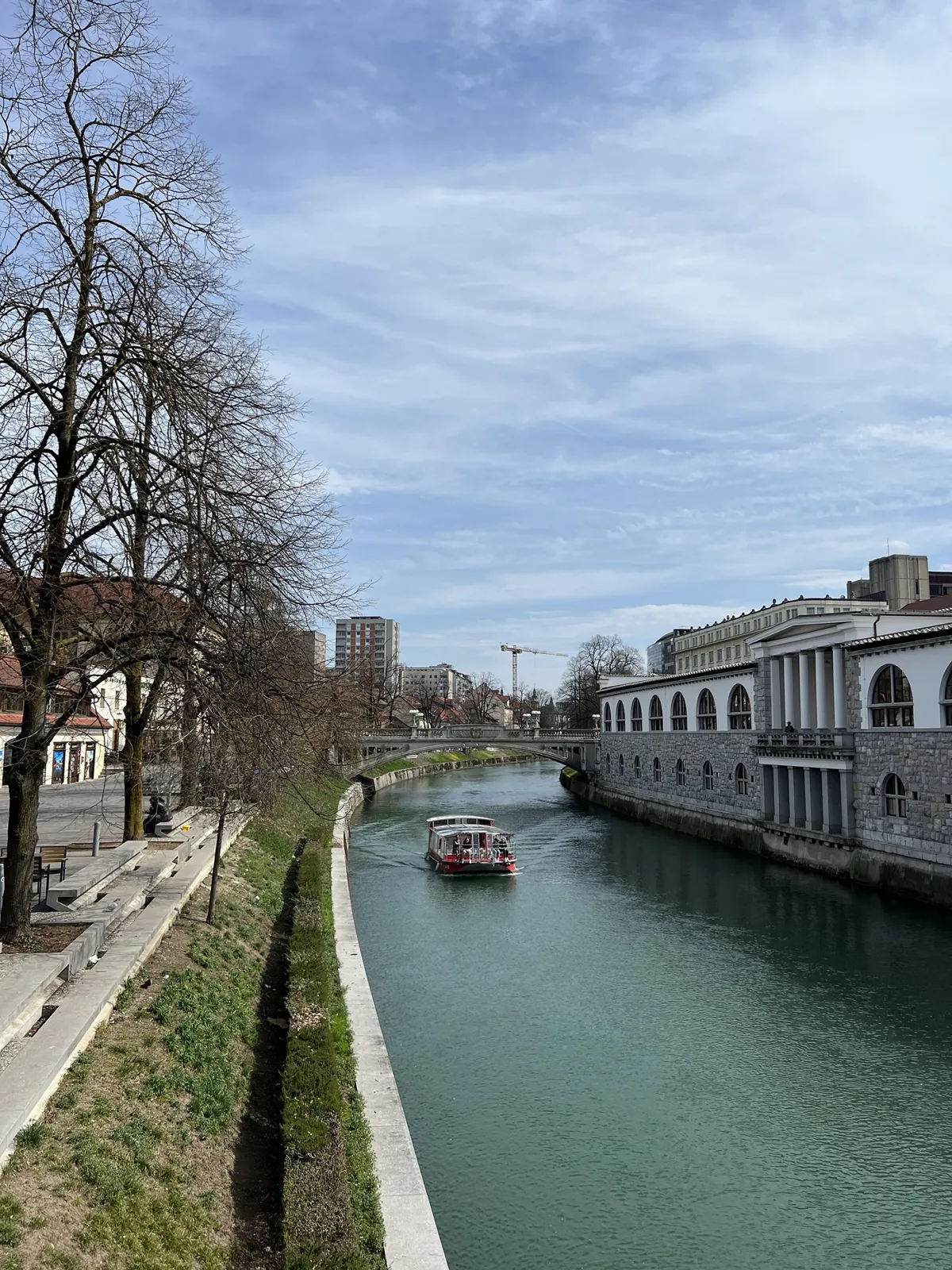
- Ljubljana: a little of every region in one walkable city.
What does the Alpine, Austrian side of Slovenia taste like?
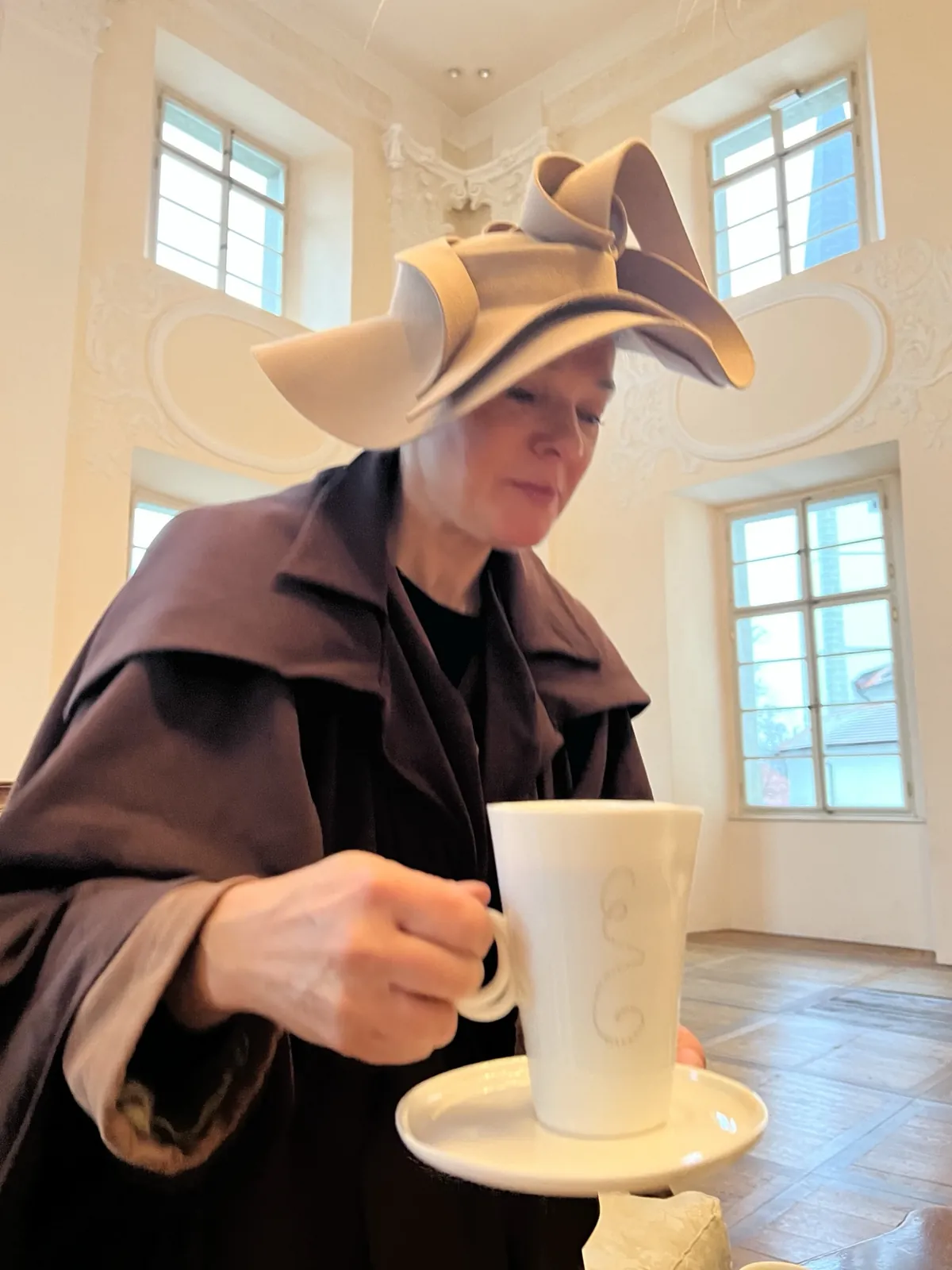
In April 2023 I joined the local chocolate tour in Radovljica, a small town near Lake Bled, run by the town's tourist board. I paid my own way and went as a regular traveler. Our hosts wore brown cloaks and a different hat at every stop, part of the living history they bring to the tour. We took a chocolate shot in the rain, stepped into an old apothecary, drank hot chocolate in a baroque hall scattered with cacao beans, and saw the 1799 cookbook by Valentin Vodnik, the first cookbook written in Slovene.
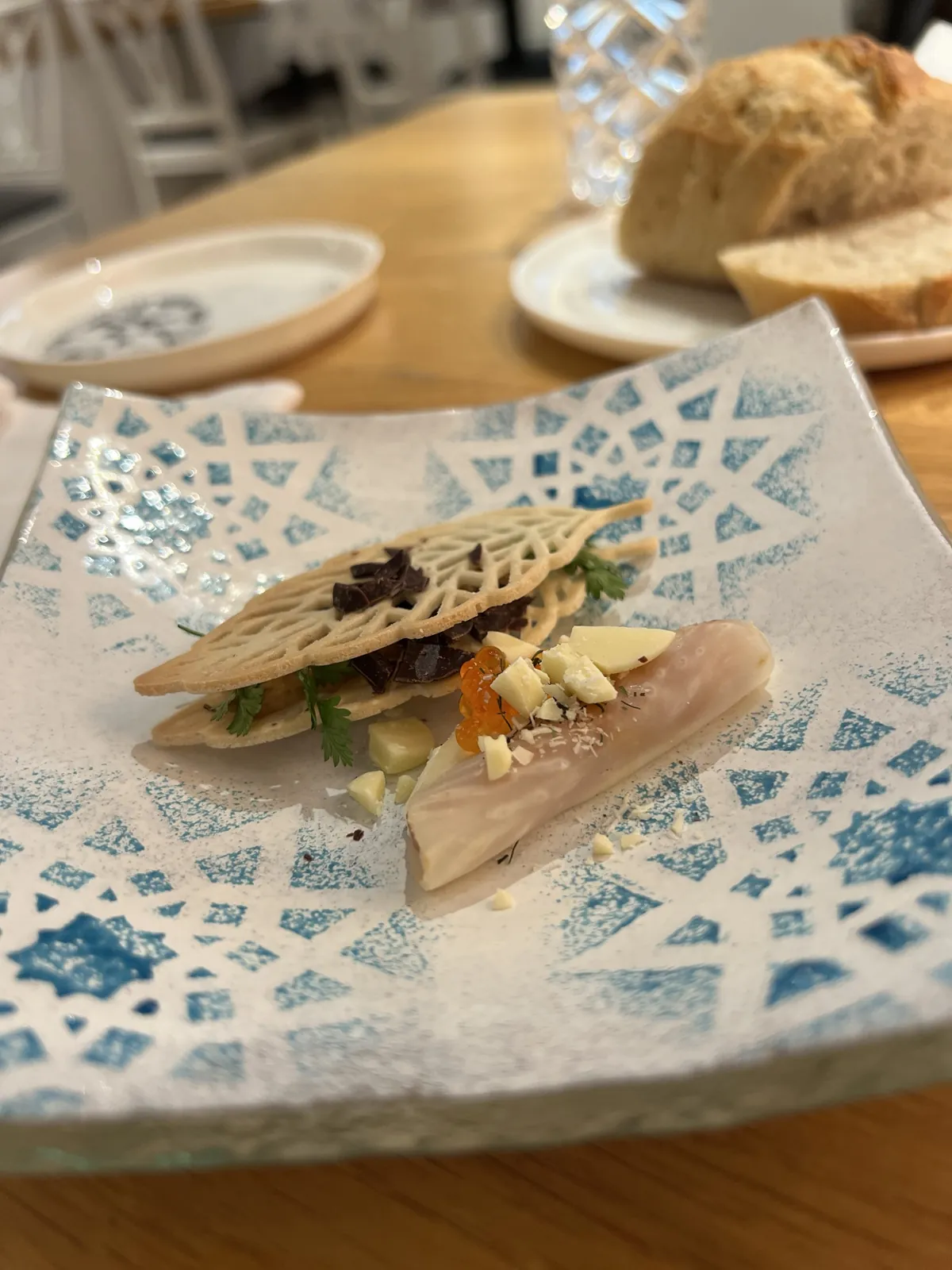
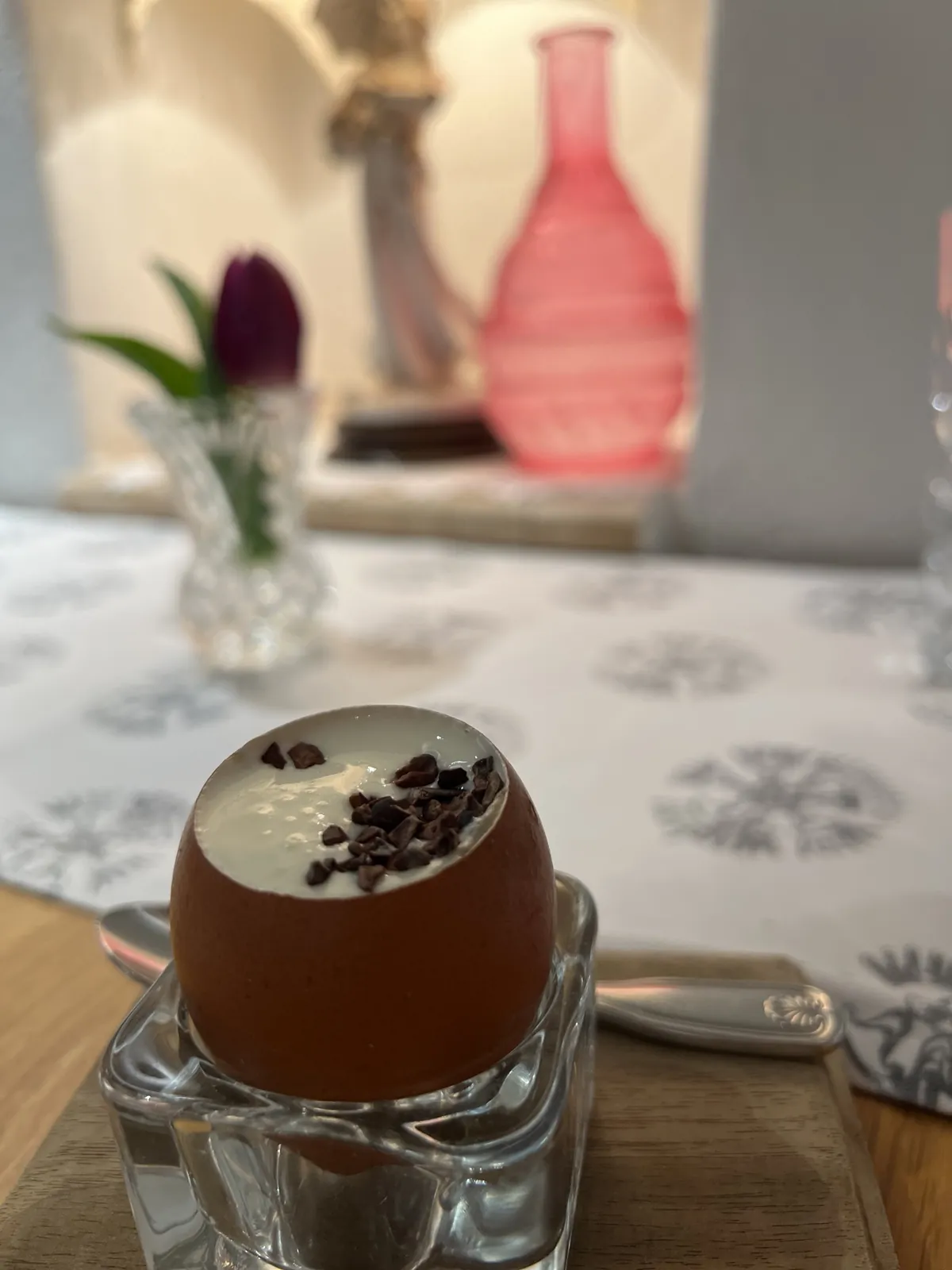
The tour ended with lunch at Hiša Linhart, where chef Uroš Štefelin names the farmer behind every dish and works chocolate into every course. I still think about two of them: a cold-cured Zupan trout with roe and white chocolate, and a chocolate "egg" for dessert. What stayed with me most was how proud everyone was of their history, and how much they wanted to share it.
What do Goriška Brda and the coast taste like?
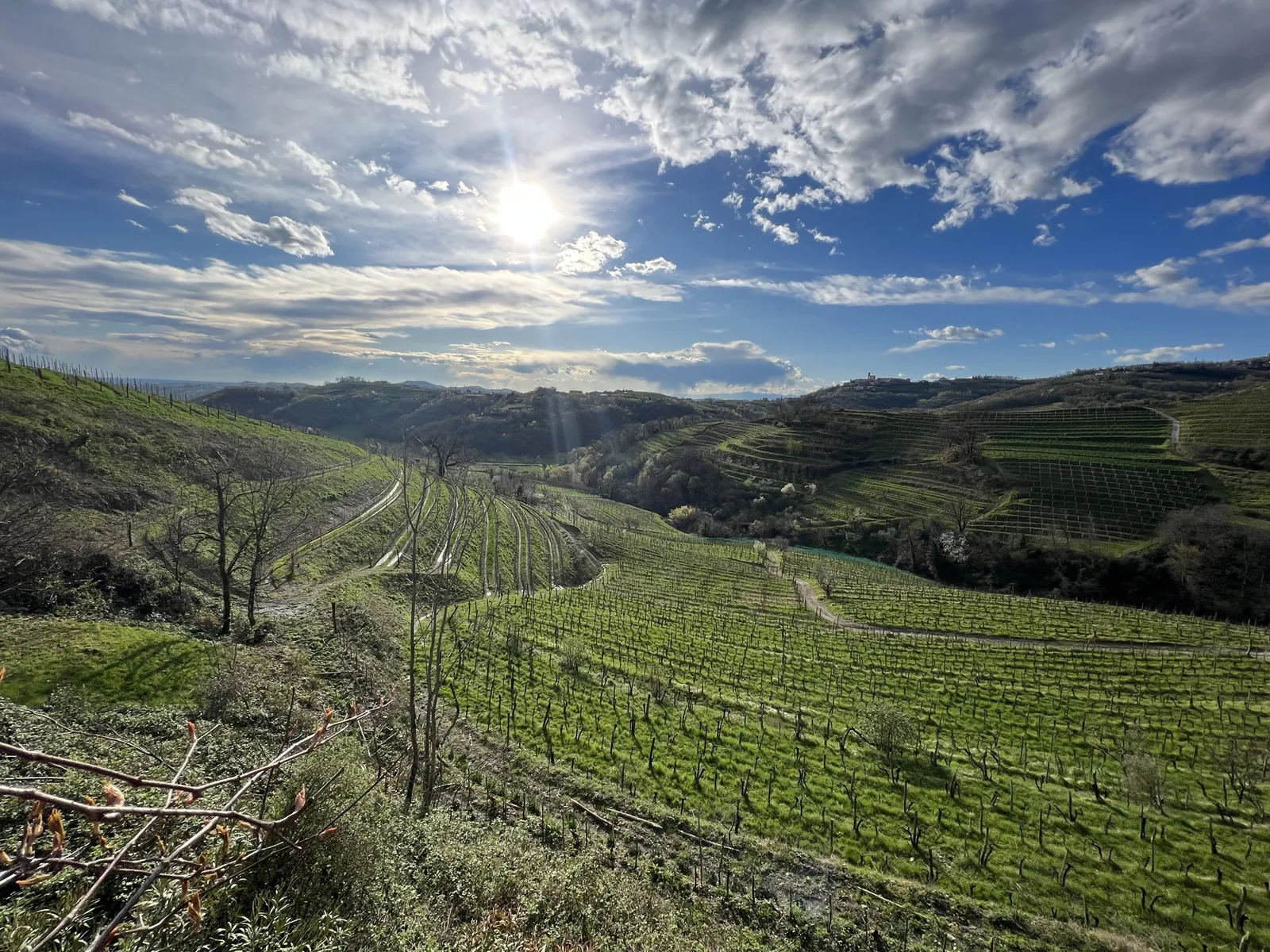
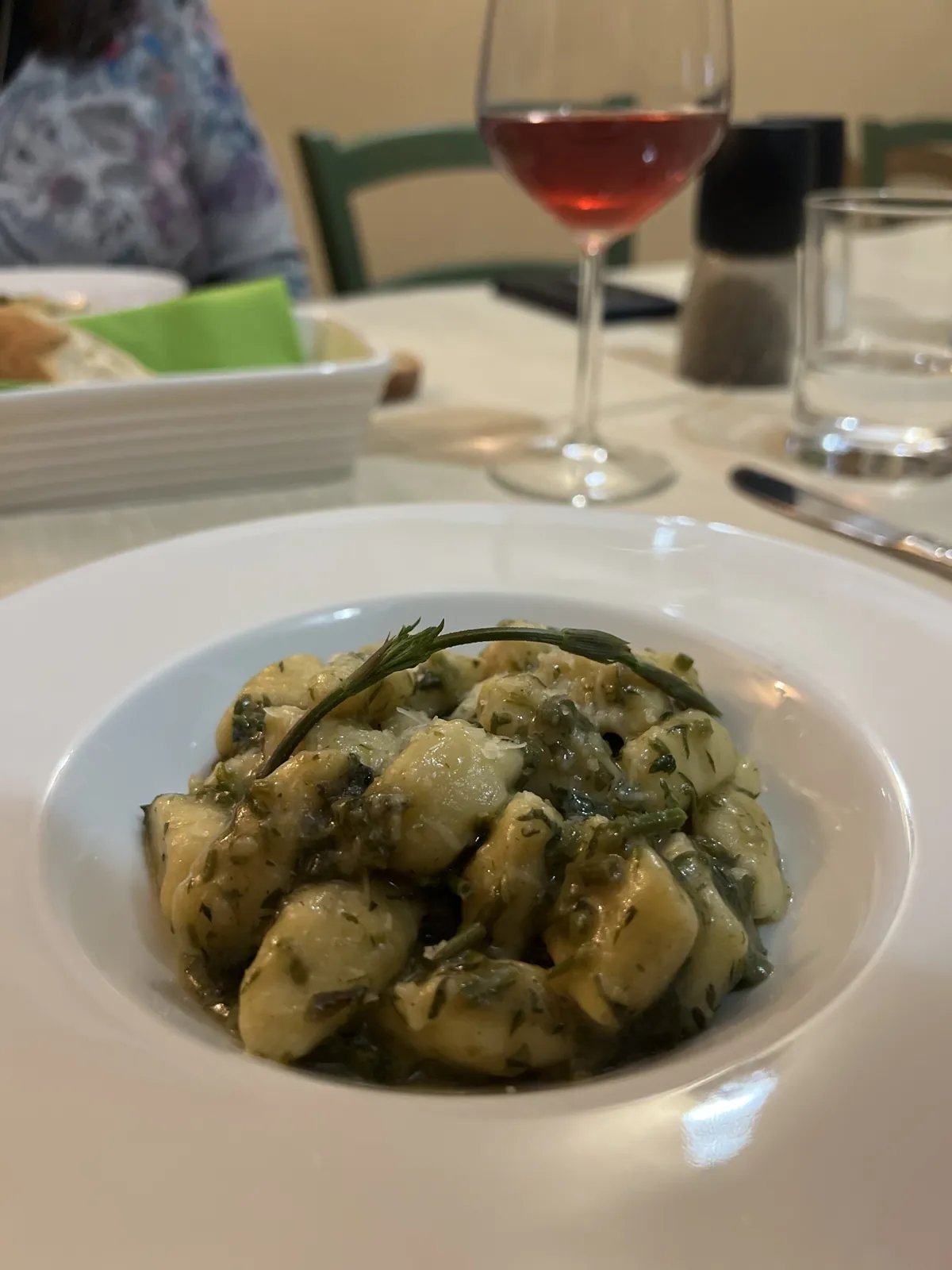
Goriška Brda sits right on the Italian border, and you taste it on the plate. On the same April 2023 trip I stayed at Hiša Štekar, the region's first tourist farm, opened in 1986, in a room facing the vineyard. We ate in a courtyard under bare vines at golden hour: polenta with pršut, Slovenia's cured ham, then gnocchi with wild spring shoots. Breakfast came with homemade jams.
Then there's the wine. Their Rebula, Brda's signature grape, was an orange wine, made by leaving the juice on the skins, and it had more minerality than I expected. I loved it. Down the road at Klet Brda, the region's wine cooperative, they age wine in egg-shaped barrels. It's Italian in spirit, with that Slovenian edge.
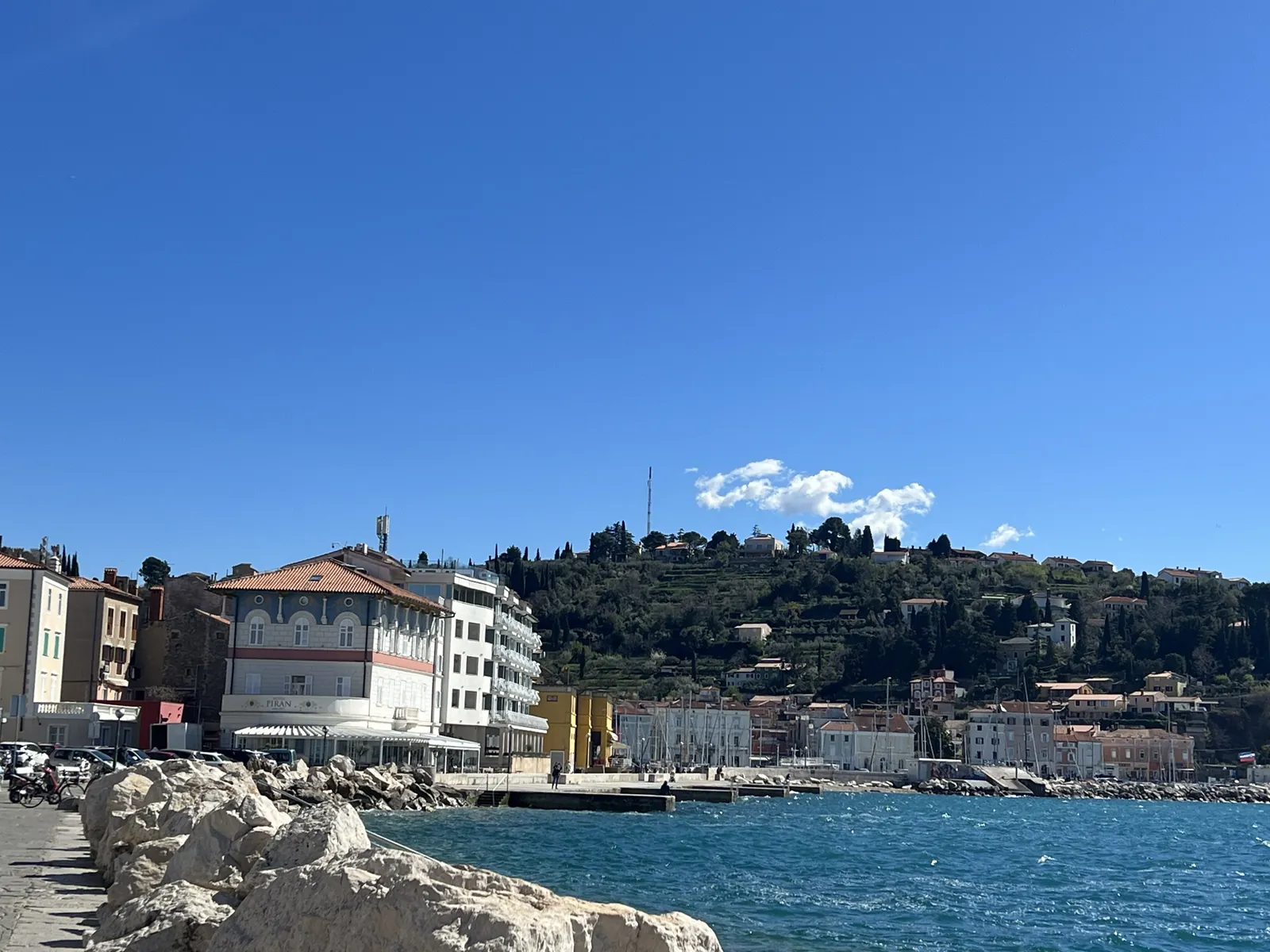
Follow that Italian thread down to the coast and you land in Piran, a Venetian-looking town on the Adriatic, and back at Ribič Baja with a bowl of mussels. If wine is your focus, I cover Brda alongside 8 other regions in Which wine regions are worth traveling for?
What do Maribor and Štajerska taste like?
The first time I saw Štajerska, Slovenian Styria, was through a train window on my way from Budapest to Ljubljana. This is Slovenia's other big wine country, in the northeast around Maribor, the country's second-largest city. Styria was once one region shared with Austria, and that Austrian influence still runs through the food.
Maribor is home to the Old Vine on the Drava riverfront, more than 400 years old and recognized as the oldest vine in the world that still produces grapes. The region is known for crisp whites: Laški Rizling, and Šipon, the same grape as Hungary's Furmint. It's also pumpkin seed oil country, the dark green, nutty oil Slovenians drizzle over salads, soups and even ice cream.
What does Prekmurje, Slovenia's Hungarian east, taste like?
In the far northeast, along the Mura River, the mountains flatten into farmland, and the food turns toward Hungary next door. This is Prekmurje, home of prekmurska gibanica, a layered pastry stacked with poppy seeds, cottage cheese, walnuts and apples. It's also where you find bograč, a slow-cooked paprika stew close to goulash, and that same pumpkin seed oil.
Why is Slovenia so good for farm-to-table food?
The Balkans have a huge foraging culture, and to me that's what this side gives Slovenia most: a modern version of farm to table, built on what grows nearby.
I tasted it at two meals on that trip. The gnocchi at Hiša Štekar came with wild spring shoots. At Hiša Linhart, every dish was served with the name of the farmer who grew it. Small producers, local ingredients and a cook who knows exactly where everything came from.
Can you taste all of Slovenia in one city?
Absolutely. Ljubljana is a walkable city where you can taste so many of Slovenia's regions in one place.
- Šuklje Wine Bar: my favorite pour was Belo 140, a white from Bela Krajina in the southeast. I also tried their Modra Frankinja, the local name for Blaufränkisch.
- TaBar: chef Jakob Pintar's small plates.
- Altroké: truffle garganelli, the Italian side of Slovenia in one bowl.
- Klobasarna: Carniolan sausage, Slovenia's EU-protected sausage and a taste of the Alpine side, plus sweet dumplings.
- Gelateria Romantika: potica gelato, made from the walnut-rolled cake Slovenians bring out for the holidays.
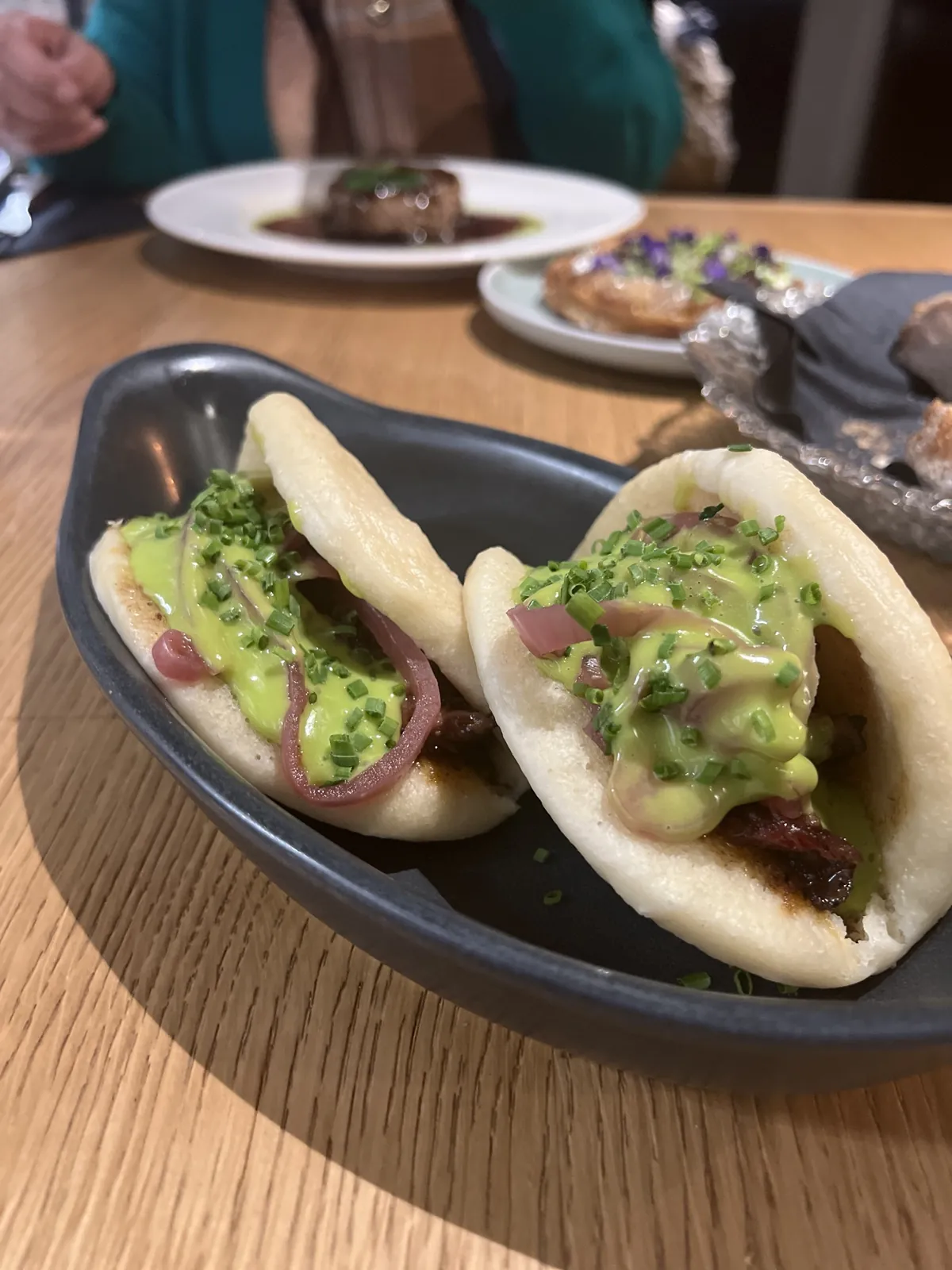
- The riverbank: a shared board and bao buns at Breg, right on the Ljubljanica.
What should you know before you go?
- Skip the bottled water. Slovenia's tap water is some of the best in the world, and there are drinking fountains everywhere. Bring a refillable bottle and save your money for wine.
- Plan around Sundays. Slovenia really does shut down on Sundays, with almost everything closed. Book Sunday meals ahead and plan for a slower day.
Who is Slovenia's food scene best for?
Travelers who love classic European food but want the possibility of an edgy twist. And travelers who care about small production and farm-to-table eating, where you know whose farm your dinner came from.
Questions travelers ask me
What food is Slovenia known for?
Carniolan sausage, pršut, potica (a rolled walnut cake), prekmurska gibanica (a layered pastry from the east), pumpkin seed oil and, on the coast, Adriatic seafood. Each region has its own specialties.
Is Slovenia good for a food and wine trip?
Yes, especially if you love classic European food with a twist, or you care about small producers and farm-to-table cooking. In one trip you can taste Austrian, Italian, Hungarian and Balkan influences without long travel days.
Is Slovenian food like Italian food?
In the west and on the coast, it's close. Brda and Piran share a lot with Italy across the border. Head north and you'll taste Austria, and in the east, Hungary.
What wine is Slovenia known for?
In Goriška Brda, Rebula, often made as an orange wine. Elsewhere, look for Modra Frankinja, whites from Bela Krajina like Belo 140, and Štajerska's crisp Šipon and Laški Rizling.
Can you drink the tap water in Slovenia?
Yes, and you should. It's excellent, and fountains are everywhere.
Are restaurants open on Sundays in Slovenia?
Many aren't. Most of the country closes on Sundays, so book ahead.
Find your way into Slovenia
Slovenia is the country I'm most passionate about, and I hold a Slovenia Expert Certificate. Tell me what you love to eat, and I'll show you which corner of Slovenia cooks it best. Book a call with me and we'll start with your favorite meal. Or see how I plan Slovenia trips.